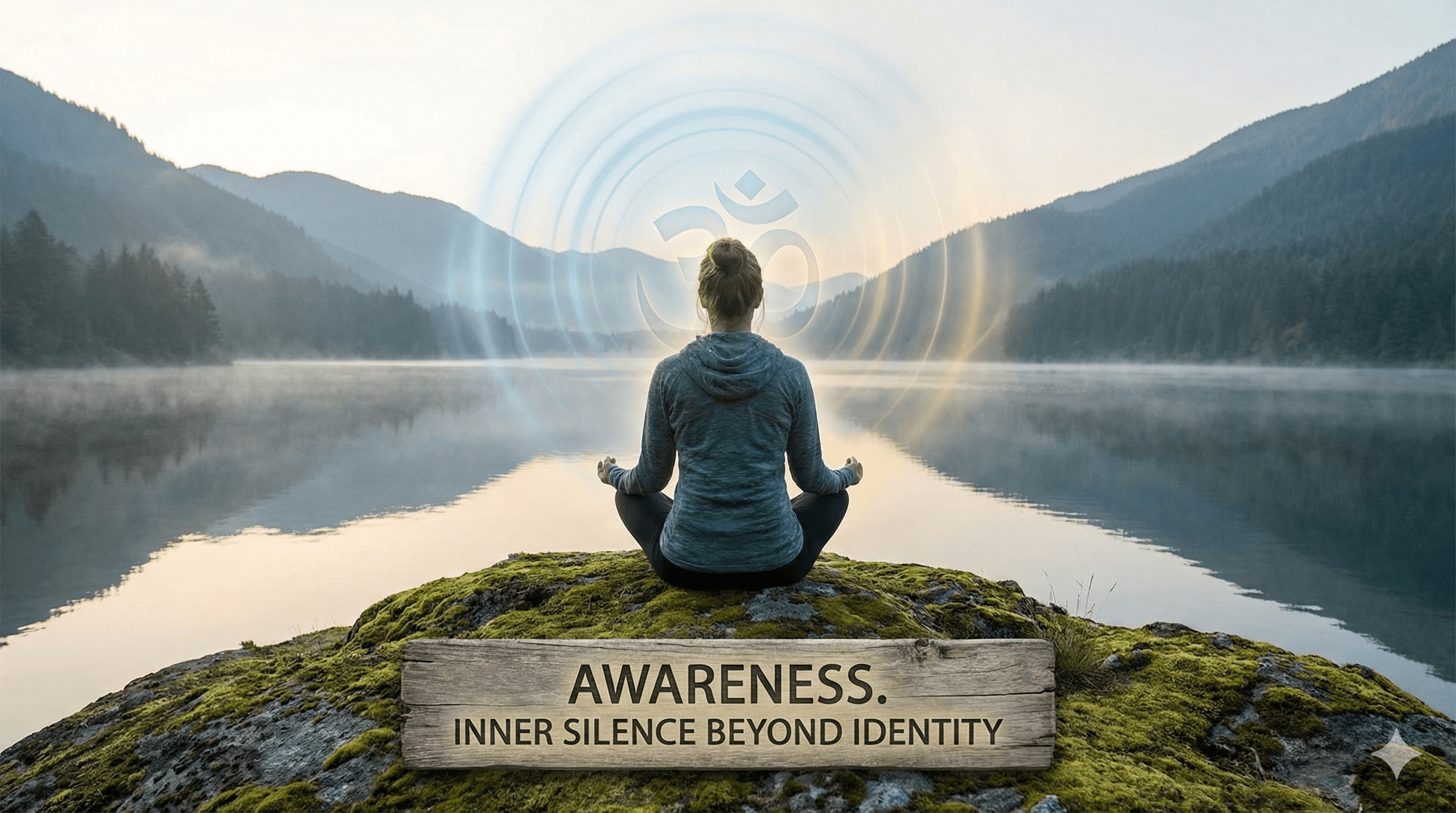
How Identity Creates Meaning, Conflict, and Reality
When you wake up in the morning, the world appears instantly.
Room. Phone. Notifications. Responsibilities.
It feels external. Solid. Independent of you.
But pause for a moment.
Before the world becomes meaningful, something else appears first:
“I.”
I need to get up.
I have work.
I am late.
I am stressed.
The “I” arrives, and the world organizes itself around it.
What if the world, as you experience it, is structured by that sense of identity?
Not physically created by you.
But psychologically constructed around “me.”
Dikshaant
Feb 16, 2026
10
mins
Reading time

Ego Is the Meaning-Making Center
Ego is not just arrogance. It is the center point from which everything gains meaning.
Without “I,” what is “mine”?
My career.
My partner.
My success.
My failure.
Ego is the lens that says:
“This benefits me.”
“This threatens me.”
“This validates me.”
“This diminishes me.”
Remove the lens, and the emotional intensity shifts.
Money is paper until it becomes my security.
Criticism is sound until it becomes an attack on me.
Time is movement until it becomes my deadline.
The raw world is neutral.
Meaning is ego-dependent.
The Seed That Becomes a Universe
Think of ego as a seed.
Inside it is a simple movement: “I am.”
From that seed, branches grow:
If I am, then others are separate.
If I am separate, then I must protect myself.
If I must protect myself, I must compare, compete, defend.
From a single psychological center, an entire world of conflict emerges.
Past becomes “my history.”
Future becomes “my anxiety.”
Relationships become “my validation or rejection.”
The structure of your world mirrors the structure of your identity.
How Ego Shapes Relationships
In conversation, you rarely listen directly.
You filter.
“Does this person respect me?”
“Am I being appreciated?”
“Am I being judged?”
You think you are responding to another human being.
Often, you are responding to your own image.
Two people in a relationship are not just interacting as individuals. They are interacting through identities.
If ego is strong and rigid, every disagreement feels like attack.
If ego softens, listening becomes possible.
Not agreement.
Listening.
And listening changes everything.
Work, Achievement, and the Image of Self
Consider work.
You take on a project. But beneath effort, there is often a quiet calculation:
How will this affect how I am seen?
Performance anxiety is rarely about the task itself. It is about identity risk.
If this fails, what does that say about me?
This is why some people collapse under minor setbacks while surviving major hardships.
The threat is not external.
It is to the image.
When you act without attaching identity to outcome, something shifts.
You still work hard.
But you are no longer defending a psychological portrait.
You are simply engaging with reality.
If Ego Dissolves, Does the World Disappear?
Not physically.
But its emotional charge changes.
Without ego:
Money is a tool, not self-worth.
Praise is pleasant, not addictive.
Criticism is feedback, not annihilation.
Time is movement, not pressure.
The world does not vanish.
The psychological drama does.
You begin to see people more directly. Not as allies or threats, but as human beings navigating their own identity structures.
That clarity alone can transform leadership.
A leader who is less identified reacts less defensively, listens more openly, and makes decisions with less egoic distortion.
The Practical Side of Ego Inquiry
This is not abstract philosophy.
It is deeply practical.
Next time you feel anger, ask:
What image of myself feels threatened?
Next time you feel jealousy, ask:
What identity am I protecting?
Next time you feel pressure, ask:
Am I responding to reality or to how this affects my self-image?
Seeing ego does not require suppressing it.
It requires observing it.
Observation loosens identification.
And when identification loosens, psychological suffering reduces.
The World Without Egoic Weight
Imagine acting without constant comparison.
Imagine loving without turning it into ownership.
Imagine working without tying your existence to results.
This is not indifference.
It is freedom from identity addiction.
Life becomes simpler.
You still have preferences.
You still make decisions.
You still build and create.
But you are no longer living to maintain an image.
You are living.
Closing Reflection
The next time something feels overwhelmingly important, pause.
Ask quietly:
If “me” were not at the center of this, how would this look?
That question alone can loosen the architecture of your world.
And when the architecture shifts, so does your experience of reality.