Language as a Mirror of Consciousness
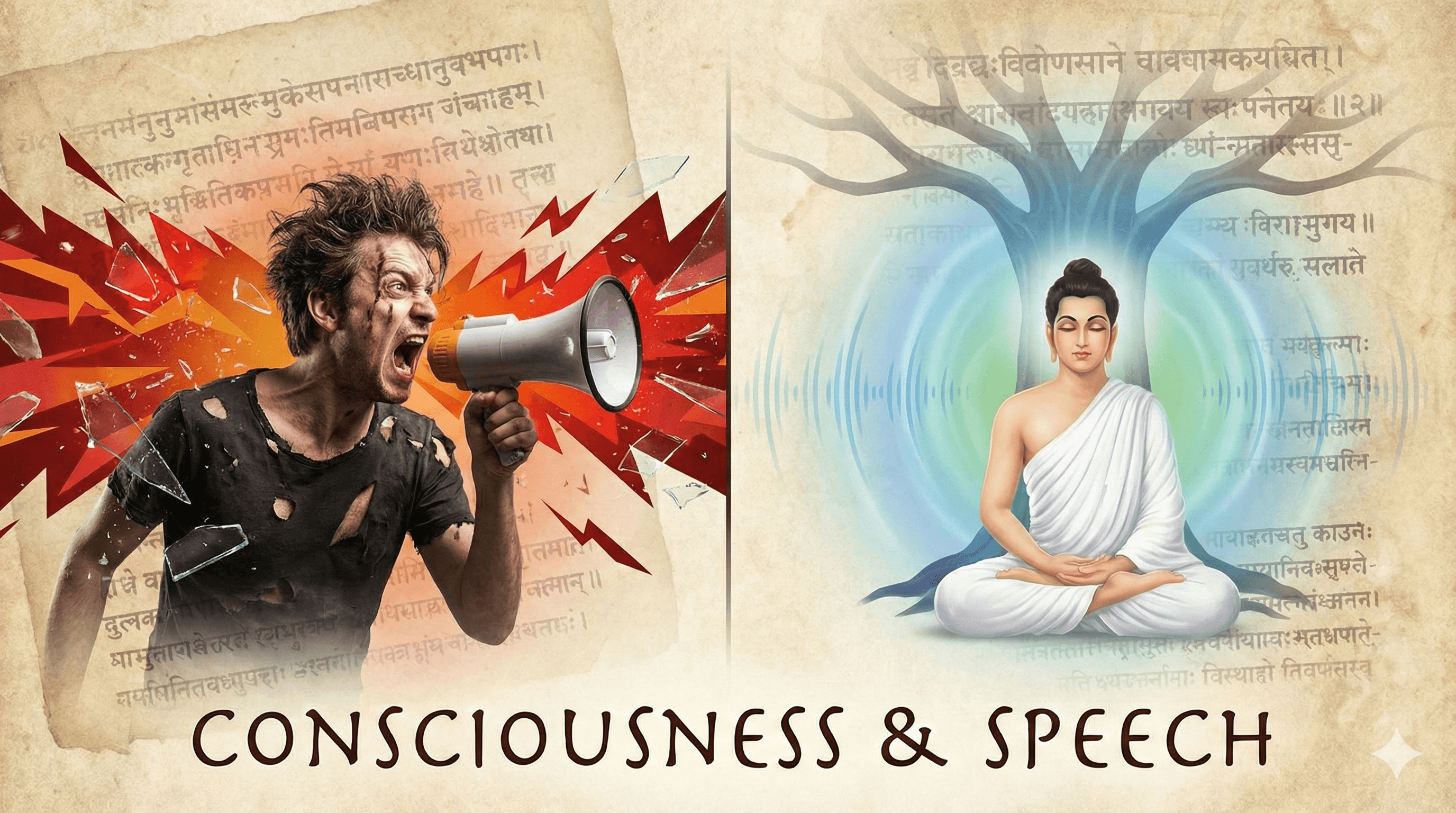
From the lens of the Yoga Vasistha and the Upanishads, mind creates reality through thought and speech.
Speech is not random.
It emerges from conditioning.
When abusive words dominate a culture, they reveal unconscious fears, suppressed aggression, and unresolved identity tensions.
Language is collective psychology made audible.

Dikshaant
Feb 22, 2026
5
mins
Reading time
Why Abuse Often Targets Women
In much of Indian culture, many common gaalis attack:
A person’s mother
Sister
Female lineage
Why?
Because historically, honor was tied to female sexuality and purity.
In patriarchal systems:
Male status = control over female bodies
Family prestige = perceived chastity of women
Attacking a woman verbally became a symbolic attack on male honor.
So the abuse is not really about women.
It is about power and dominance between men.
The Psychology of Gendered Insults
The psychology of abuse reveals three drivers:
Power Assertion
Insulting female relatives humiliates the opponent indirectly.Sexual Repression
Cultures that suppress open dialogue about sexuality often convert that energy into vulgar expression.Collective Shame Projection
Repressed shame is projected outward through aggression.
From a yogic view, unintegrated desire becomes distorted speech.
The mind that is not self-aware externalizes its inner conflict.
Historical Roots of Gender-Based Gaali
The history of abusive language in India is linked to:
Feudal honor systems
Clan-based identity
Caste hierarchies
Patriarchal inheritance structures
In warrior cultures, dishonoring women symbolized social destruction.
Over time, these insults became normalized slang.
Language fossilizes history.
What once was tied to honor warfare became casual street vocabulary.
Why Gendered Insults Persist Today
Even in urban, educated spaces, gendered abuse survives.
Why?
Because:
It is normalized in peer bonding
Media reinforces it
Masculinity is often defined through dominance
Young boys inherit this language before they understand its implications.
It becomes reflexive.
From a consciousness perspective, repetition without awareness becomes samskara, a mental imprint.
Emotional Impact on Society
The impact of gender-based gaali on society is subtle but deep.
It:
Reinforces misogyny
Normalizes disrespect toward women
Embeds violence into humor
Shapes unconscious attitudes
Language trains perception.
If women are constantly invoked as objects in insult, subconscious respect erodes.
Cultural psychology slowly bends toward inequality.
A Yogic Perspective on Healing Speech
From the Upanishadic view:
Speech is vibration.
Vibration shapes consciousness.
When speech becomes crude, consciousness coarsens.
Yoga suggests:
Awareness before reaction
Witnessing anger before expressing it
Transforming aggression into clarity
The real strength is not dominance.
It is restraint rooted in understanding.
When awareness matures, abuse loses its thrill.
And dignity replaces dominance.